
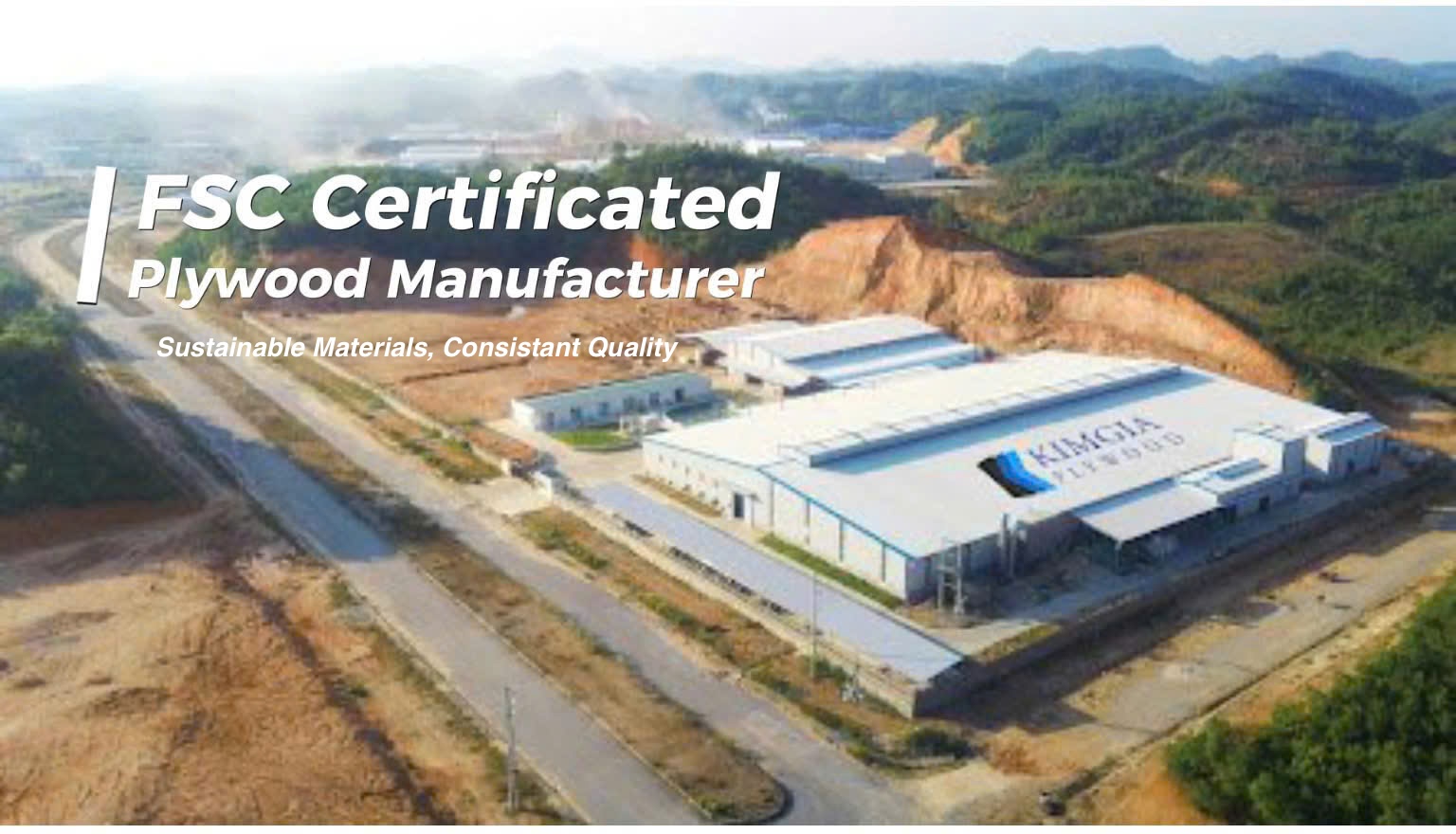
How to understand the European plywood standards?
For many Vietnamese plywood manufacturers,who are naturely with Low gap but large volume of US market, all started to aware the several barriers and demnding from European clients.
The price is no more the priority requirements but now European clients will also take their first concern if your products and factory can be able to qualified to enter the market.
it is not only basic requirements such as Formaldehyde standard E1 at the initial but now E0.5 with forlmadehyde emission not exceed 0.0625 gsm from August 2026 but also if your products materials tracibility documents can meet the EUDR regulation, or certificated with FSC, PEFC.
And if your quality can be accordance to EN314, EN636 standard.
So let we discuss about European plywood standard system quality and how to understand the clients inquiry.

Understanding EN 314: The Standard That Measures Bonding Strength
One of the most frequently requested standards for European plywood standard is EN 314.
Many buyers think EN 314 simply refers to glue quality.
In reality, it evaluates how well the adhesive bond between veneer layers performs after exposure to different moisture conditions.
The standard uses increasingly severe testing methods.
| EN 314 Test | Testing Condition | Performance Level |
| Class 1 | 24-hour water immersion | Dry interior use |
| Class 2 | Boiling water test | Humid interior use |
| Class 3 | Boiling and drying cycle | Exterior structural use |
| Class 4 | 72-hour boiling test | Extremely demanding applications |
The more severe the testing, the stronger the evidence that the plywood can maintain its bonding strength under harsh environmental conditions.
Which Products Require the Highest Bonding Performance?
The most demanding applications generally require the highest bonding performance.
These include:
- Film Faced Plywood
- Marine Plywood
- Exterior Structural Plywood
- Transport Flooring (Anti-Slip Film Faced Plywood)
- Agricultural and Industrial Plywood
These products are regularly exposed to water, humidity, weather, or heavy mechanical loads.
A durable glue line is essential for maintaining structural integrity throughout the product’s service life.
Understanding EN 636: Choosing the Right Plywood for the Right Environment
While EN 314 focuses on adhesive performance, EN 636 answers another important question:
Where can the plywood safely be used?
EN 636 classifies plywood according to its service environment.
EN 636-1 – Dry Conditions
Suitable for interior environments with low humidity.
Typical applications include:
- Furniture
- Cabinets
- Interior decoration
- Interior wall panels
EN 636-2 – Humid Conditions
Designed for protected environments where humidity is higher but direct weather exposure is limited.
Common applications include:
- Kitchens
- Bathrooms
- Interior flooring
- Roof structures protected from rain
EN 636-3 – Exterior Conditions
This classification is intended for plywood exposed to severe moisture or outdoor environments.
Typical products include:
- Film Faced Plywood
- Scaffolding Platforms
- Transport Flooring
- Agricultural Buildings
- Outdoor Construction
These panels are manufactured using weather-resistant bonding systems and durable veneer structures capable of prolonged moisture exposure.
EN 314 and EN 636 Work Together
Many buyers ask:
Which standard is more important—EN 314 or EN 636?
The answer is that they complement each other.
EN 314 evaluates the durability of the glue bond.
EN 636 classifies where the plywood is suitable to be used.
For example:
| Product | Typical EN 314 | Typical EN 636 |
| Interior Furniture Plywood | Class 1 | EN 636-1 |
| Kitchen Plywood | Class 2 | EN 636-2 |
| Structural Plywood | Class 2 or 3 | EN 636-2 / EN 636-3 |
| Film Faced Plywood | Class 3 | EN 636-3 |
| Formwork Plywood | Class 3 | EN 636-3 |
| Vehicle Flooring | Class 3 | EN 636-3 |
Understanding both standards helps buyers specify the correct plywood for each project instead of selecting products based only on price.
Meeting the Standard Is One Thing. Producing It Consistently Is Another.
From our experience, learning the standards is actually the easy part.
The real challenge is building a production system capable of meeting those standards every single day.
Many factories can produce excellent samples.
Far fewer factories can guarantee that every panel in mass production performs the same way during EN testing.
That consistency depends on much more than glue formulation. It requires:
- Strict raw material selection
- Controlled veneer moisture
- Stable pressing parameters
- Continuous laboratory testing
- A disciplined QA/QC system
- Well-trained production staff
Without these systems, maintaining European quality standards over hundreds of containers becomes extremely difficult.
How Kim Gia Is Preparing for the European Market
As more of our customers shift their focus toward Europe, we have invested heavily in preparing for these higher standards.
At Kim Gia Factory, we have established our own in-house laboratory and continuously train our technical, production, and quality control teams to better understand European regulations and testing requirements.
More importantly, we continue improving our QA/QC procedures so that every plywood panel leaving our factory is produced under the same quality control system—not only to pass laboratory testing, but to deliver consistent performance in every shipment.
For us, exporting plywood to Europe is not simply about obtaining certificates. It is about building a production system that gives customers confidence that the quality they receive today will be the same quality they receive in every future order.
Loc Luong
Whatsapp/Wechat: +84902 200 987
Email: Locluong.kggroup@gmail.com
Reference
https://store.uni.com/en/en-636-2012-a1-2015?utm_source=chatgpt.com